
Karen Thorley
15/06/2020
Just is a very common adverb in English, especially in speaking and it has different meanings.
We can use just meaning ‘simply,’ exactly or ‘absolutely’ to add emphasis to a statement, it can also mean recently, or hardly, or can be used to minimise or soften impact and for diplomacy:
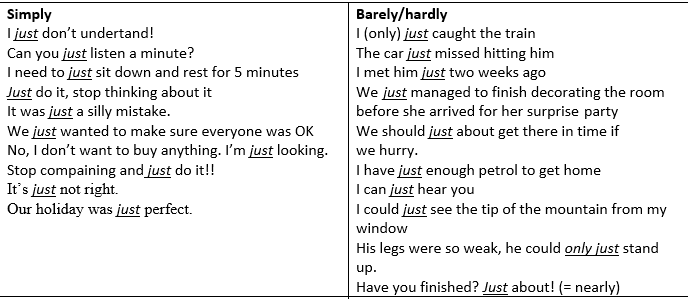
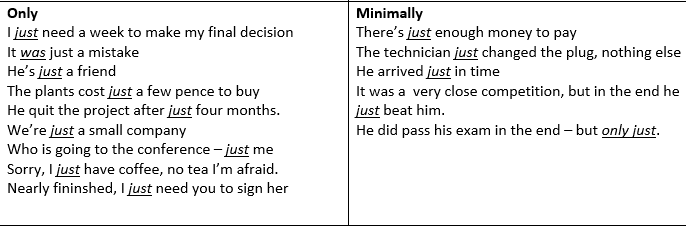
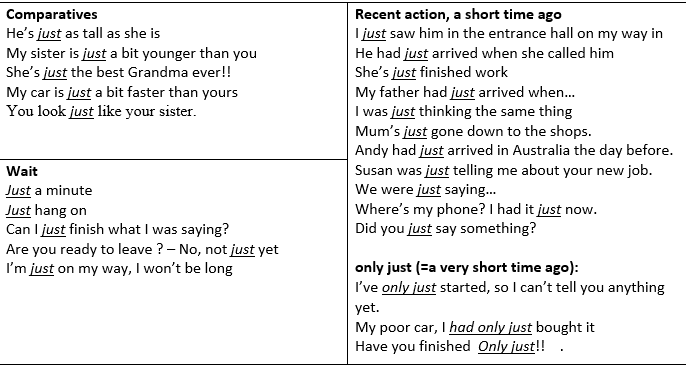
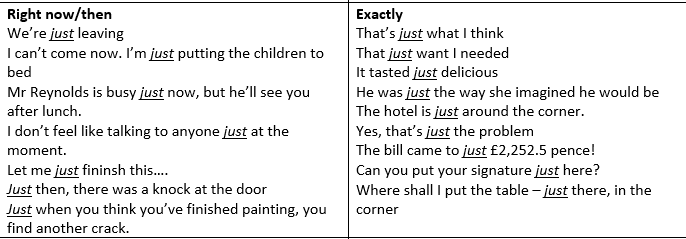
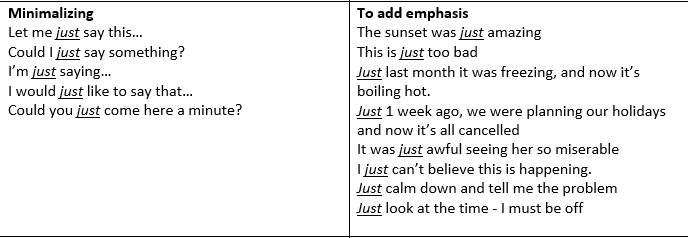
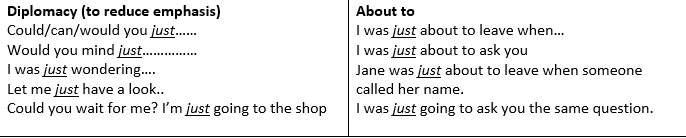
It is also quite common when used in names, logos and publicity:

And songs:
I just called to say I love you (Stevei Wonder) https://www.youtube.com/watch?v=5kIdjnuLeXo
Just like a woman (Bob Dylan) https://www.youtube.com/watch?v=dRLXZVojdhQ
Just because I’m a woman (Dolly Parton) https://www.youtube.com/watch?v=uHkPdTd4eeI
Just like you (Louis Tomlinson) https://www.youtube.com/watch?v=qvXXMsiQBDg
Just like Heaven (The Cure) https://www.youtube.com/watch?v=MHpwCDHYPOA
And films:

Other typical expressions:
Just joking – Don’t be offended, I was just joking
Just because (for the sake of it) – Why did you paint your room? Just because! (=Just for the sake of it, or “porque sí”)
Just so – Do it just so = exactly like this
Just good friends = no romantic involvement
Just like that – To describe an element of easiness and surprise: And then he walked away from his boss…just like that!
Only just – (por poco) – He only just managed to get out of the house before the fire took over
Just my luck! – (sacrcastic) This is typical of my bad luck
It’s just as well…. It’s lucky (“menos mal”) “it’s just as well you’re here, we need to start early
It’s just behind you – It’s right, directly behind you
Just in time – not before, not after
Just married

I just hope this helped you!!!
Leave a Comment
Lo siento, debes estar conectado para publicar un comentario.